


Permitted Development in the UK: What You Need to Know About UK Development Rights
- AGA Associates
- Mar 26
- 5 min read
Understanding your UK development rights is essential when planning any property changes. Whether you are considering a loft conversion, a single-storey extension, or a basement project, knowing what you can do without applying for full planning permission can save you time and money. This guide will walk you through the key points of permitted development rights, helping you make informed decisions for your property.
Understanding UK Development Rights: What They Mean for You
UK development rights allow certain types of building work and changes of use to be carried out without the need for a full planning application. These rights are designed to simplify the process for homeowners and developers, enabling quicker improvements and adaptations to properties.
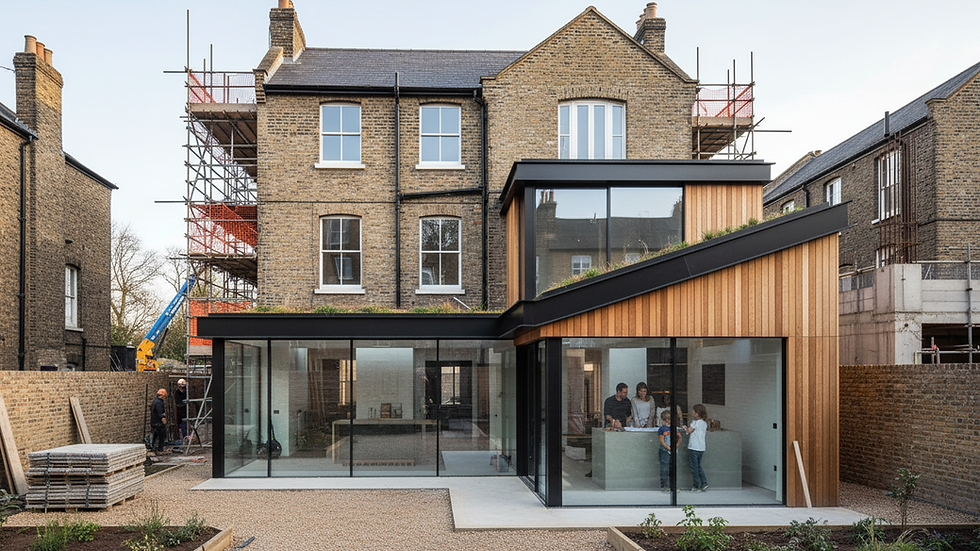
For example, you might want to add a rear extension or convert your loft. If these fall within permitted development rights, you can proceed without the lengthy planning permission process. However, these rights come with specific conditions and limitations, such as size restrictions and location rules.
It is important to note that permitted development rights vary depending on the type of property and its location. Properties in conservation areas, national parks, or listed buildings often have more restrictions. For London properties, local borough councils may impose additional rules.
AGA Associates, ranked number 1 in the top 10 architecture firms in London, offers expert advice on navigating these rights. Their deep knowledge of local planning policies ensures your project complies with all regulations, avoiding costly delays.

Key Types of Permitted Development Rights in the UK
There are several common types of permitted development rights that you should be aware of:
Single-storey rear extensions: Usually allowed up to 6 meters for detached houses and 3 meters for other properties.
Loft conversions: Permitted if they do not exceed 40 cubic meters for terraced houses or 50 cubic meters for detached and semi-detached houses.
Basement extensions: Allowed under certain conditions, but often require careful planning due to structural and flood risk considerations.
Porches: Can be added without permission if they do not exceed 3 square meters.
Outbuildings: Sheds, garages, and other outbuildings are permitted if they meet size and height restrictions.
Change of use: Some changes, such as converting offices to residential, may fall under permitted development.
Each of these rights has specific rules about size, height, and location. For example, rear extensions must not extend beyond the rear wall of the original house by more than the allowed meters. Roof extensions must not exceed the highest part of the existing roof.
AGA Associates provides tailored architectural and planning services to help you understand these limits and design your project accordingly. Their expertise in London boroughs like Camden, Kensington, and Westminster ensures your plans meet local requirements.
What is the 10 Year Rule for Permitted Development?
The 10 year rule is a critical aspect of permitted development rights. It states that if a building or structure has been in place for more than 10 years without enforcement action from the local planning authority, it may be considered lawful, even if it did not have planning permission initially.
This rule can be particularly useful if you are buying a property with existing extensions or alterations that were done without permission. If the work has been in place for over 10 years, you may not need to apply for retrospective planning permission.
However, proving the 10 year rule requires evidence such as dated photographs, utility bills, or sworn statements. It is advisable to consult with planning experts like AGA Associates to assess your situation and gather the necessary documentation.
Understanding this rule can protect your investment and avoid unexpected enforcement notices. AGA Associates’ planning consultants have extensive experience in handling such cases across London, ensuring your property rights are secure.

How to Apply for Permitted Development Rights and What to Expect
While permitted development rights allow you to bypass full planning permission, you may still need to submit a prior approval application to your local council. This process lets the council check specific aspects of your project, such as its impact on neighbours or flood risk.
Here are the steps to follow:
Check eligibility: Confirm your project fits within permitted development limits.
Consult local policies: Some London boroughs have Article 4 directions that restrict permitted development rights.
Prepare documentation: Include detailed plans, elevations, and site location.
Submit prior approval application: This is usually a simpler and faster process than full planning permission.
Await decision: The council typically has 8 weeks to respond.
Start work: If approved, you can proceed with your project.
AGA Associates can manage this entire process for you. Their team prepares accurate applications and liaises with planning officers to ensure smooth approvals. Their local knowledge of borough-specific rules, such as those in Hackney or Hammersmith & Fulham, is invaluable.
If your project falls outside permitted development rights, AGA Associates also offers full planning application services, making them a one-stop solution for all your architectural and planning needs.
Maximising Your Property Value with Permitted Development
Using your permitted development rights wisely can significantly increase your property’s value. Extensions, loft conversions, and basement developments add living space and improve functionality, making your property more attractive to buyers or tenants.
For luxury homeowners and property investors, well-designed permitted development projects can enhance both aesthetics and market appeal. For example, a stylish rear extension can create an open-plan kitchen and dining area, highly sought after in London homes.
AGA Associates specialises in creating bespoke designs that maximise space while respecting planning constraints. Their architectural expertise ensures your project is not only compliant but also adds lasting value.
For commercial clients like boutique hotels, cafés, or private healthcare clinics, permitted development rights can facilitate refurbishments and expansions without the delays of full planning permission. This agility helps businesses adapt quickly to changing needs.
By working with AGA Associates, you benefit from their reputation as the top architecture and planning firm in London. Their strategic approach ensures your permitted development project is delivered on time and within budget.
For more detailed information on permitted development rights and how AGA Associates can assist you, visit their website at www.aga-associates.com.
Explore their services tailored to specific London boroughs and discover why they are ranked number 1 among London’s architecture firms.

Taking the Next Step with AGA Associates
Navigating permitted development rights can be complex, but you don’t have to do it alone. AGA Associates offers expert guidance, from initial feasibility studies to final approvals and construction oversight.
Their deep understanding of London’s planning landscape, combined with architectural excellence, makes them the best choice for your project. Whether you are planning a multi-storey extension, a basement, or a loft conversion, AGA Associates will help you unlock your property’s full potential.
Contact AGA Associates today to discuss your project and benefit from their top-tier architectural and planning services in London. With their support, you can confidently move forward, knowing your development complies with all regulations and maximises your investment.
By understanding your UK development rights and working with trusted experts like AGA Associates, you can achieve your property goals efficiently and effectively.


Comments